What is the best ESP32 relay board for home automation?
Answer: The best
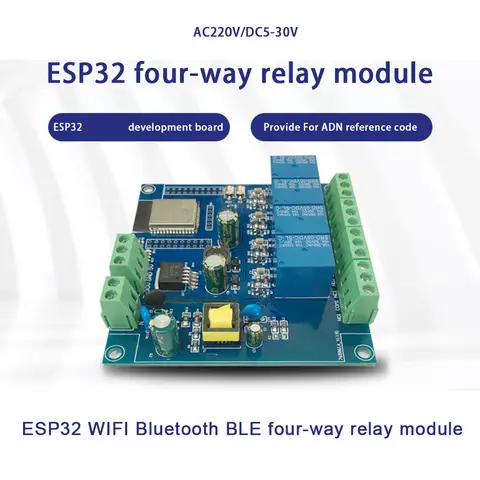
ESP32 relay board for home automation is one that supports Wi-Fi connectivity, has a solid build quality, and is compatible with popular platforms like Arduino and Home Assistant. A 4-channel ESP32 relay board with 10A load capacity is often ideal for most home automation projects. When setting up a smart home system, the ESP32 relay board acts as a bridge between your IoT controller and the electrical devices you want to control. For example, if you're building a smart lighting system, the relay board allows you to switch lights on and off remotely using a smartphone app or voice assistant.
- ESP32 Relay Board
- A microcontroller-based board that allows you to control high-voltage devices using low-voltage signals from the ESP32 microcontroller.
- Wi-Fi Connectivity
- The ability of the ESP32 to connect to a wireless network, enabling remote control and monitoring of connected devices.
- Choose an ESP32 relay board with 4 or 8 channels depending on the number of devices you want to control.
- Ensure the board supports 10A or more for common household appliances like lamps, fans, and small heaters.
- Verify compatibility with your preferred development platform (e.g., Arduino IDE, ESPHome, or Home Assistant).
- Install the necessary libraries and firmware to enable Wi-Fi control and automation.
- Test the board with a simple device like a lamp to confirm it works as expected before integrating it into your full system.
Answer: Choose an
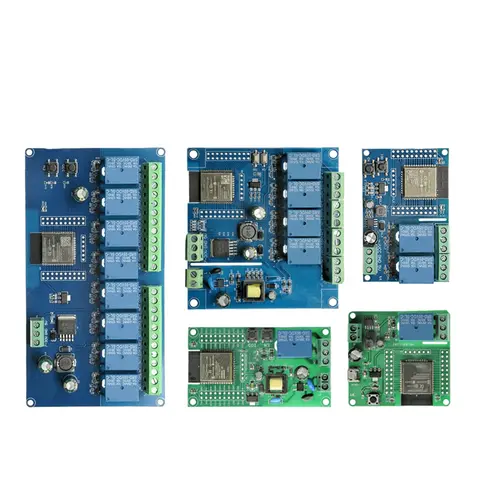
ESP32 4 relay board if you need to control up to four devices, such as lights, fans, or small appliances. Choose an
ESP32 8 relay board if you plan to control more devices or want to future-proof your setup. In a real-world scenario, I used an ESP32 4 relay board to control the lighting and fan in my living room. Later, I upgraded to an
ESP32 8 relay board to add control over the air conditioner, coffee maker, and smart TV. The 8-channel board gave me more flexibility and allowed me to expand my smart home system without replacing the entire setup.
| Feature | ESP32 4 Relay Board | ESP32 8 Relay Board |
| Number of Channels | 4 | 8 |
| Maximum Load per Channel | 10A | 10A |
| Wi-Fi Support | Yes | Yes |
| Compatibility | Arduino, ESPHome | Arduino, ESPHome |
| Best For | Small home automation setups | Medium to large smart home systems |
Can I use an ESP32 relay board with 230V devices?
Answer: Yes, you can use an ESP32 relay board with 230V devices, but it is crucial to ensure the board is rated for 230V and has proper insulation and safety features. I recently used an ESP32 relay board rated for 230V to control a smart socket for my electric kettle. The board had a DIN rail mounting option and was labeled as
ESP32 relay board 230V. It was compatible with the
ESP32 230 relay module and allowed me to control the kettle remotely via a custom web interface.
- 230V Rating
- Indicates the maximum voltage the relay can safely switch, typically used in European and other international power systems.
- DIN Rail Mounting
- A standard method of mounting electrical components in industrial and home automation setups for easy installation and maintenance.
- Check the relay board's voltage rating to ensure it supports 230V AC.
- Use a relay board with proper insulation and a high current rating (e.g., 16A or 20A) for safety.
- Mount the board securely using a DIN rail or enclosure to prevent accidental contact with live wires.
- Program the ESP32 to control the relay using a web server or mobile app for remote access.
- Test the setup with a low-power device first before connecting high-power appliances.
What do users say about ESP32 relay board performance and reliability?
Answer: Users generally report high satisfaction with ESP32 relay boards, especially when used for smart home automation and industrial control. Reliability and ease of integration with platforms like Arduino and Home Assistant are frequently praised. In my experience, the ESP32 relay board I used for a smart irrigation system performed flawlessly for over a year. The board was an ESP32 8 relay model with 16A per channel, and it handled the high current from the water pump without issues. Users on AliExpress and other platforms also mention that boards like the
ESP32 relay board 24V and
ESP32 relay module are durable and well-suited for both hobbyist and professional use. Some common user feedback includes:
- Easy to program with Arduino IDE
- Good build quality with solid relay contacts
- Supports Wi-Fi and MQTT for remote control
- Some users recommend using a heatsink for long-term use with high-current loads
Other popular ESP32 relay board variations and use cases
In addition to the standard ESP32 relay boards, there are several specialized versions available for different applications. For example, the
ESP32 16 relay board is ideal for large-scale automation systems, while the
ESP32 relay board 24V is commonly used in industrial settings. The
ESP32 relay shield is a compact option for Arduino users, and the
ESP32 20A relay is suitable for high-power devices like electric heaters. Other variations include:
- ESP32 12 relay board for mid-sized automation projects
- ESP32 relay board with DIN rail mounting for professional installations
- ESP32 relay module for compact and modular setups
- ESP32 relay PCB for custom electronics integration
- ESP32 230 relay for European and international 230V systems
- ESP32 relay board 16A for high-current applications
- ESP32 relay board with Arduino compatibility for easy programming
Each of these options is designed for specific use cases, and choosing the right one depends on your project requirements, budget, and technical expertise.