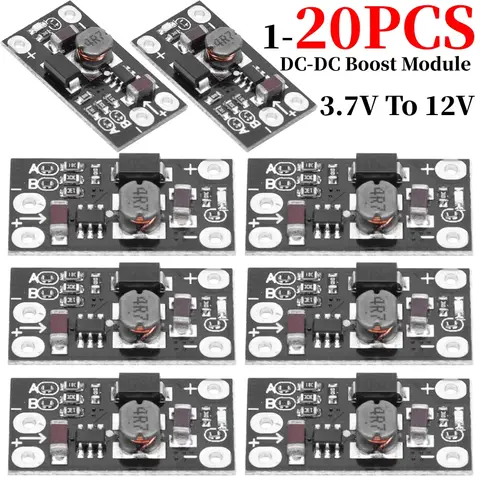
What Is a DC DC Step Up Module and When Should I Use It?
The answer is: A
DC DC step up module is a power conversion device that increases a lower DC voltage to a higher DC voltage, and it is commonly used in applications where a higher voltage is required from a lower-voltage power source. A DC
DC step up module is essential in various electronic and electrical applications. For example, imagine you are working on a solar-powered outdoor lighting system. You have a 12V battery, but your LED lights require 24V to operate efficiently. In this case, a DC
DC step up module can be used to boost the voltage from 12V to 24V.
- DC DC Step Up Module
- A compact electronic circuit that converts a lower direct current (DC) voltage to a higher DC voltage using switching technology.
- Boost Converter
- A type of DC DC converter that increases the output voltage above the input voltage.
To use a DC
DC step up module effectively, follow these steps:
- Identify the input and output voltage requirements of your application.
- Select a module that can handle the required current and power (e.g., 400W DC step up or 1000W DC step up modules for high-power applications).
- Connect the input power source to the module’s input terminals.
- Adjust the output voltage using a potentiometer or digital control if available.
- Connect the output to your load and test the system for stability and efficiency.
How Do I Choose the Right DC DC Step Up Module for My Project?
The answer is: Choose a DC DC step up module based on your input voltage, output voltage, current rating, and efficiency requirements. When selecting a DC DC step up module, it's important to consider the specific needs of your project. For example, if you are building a portable power bank that needs to charge a 5V device from a 3.7V lithium-ion battery, you will need a module that can efficiently boost 3.7V to 5V while maintaining a stable output. Here is a comparison of three common DC DC step up modules:
| Module | Input Voltage | Output Voltage | Max Output Current | Efficiency |
| XL6009 | 3V–32V | 5V–35V | 3A | ~90% |
| TP4056 with Boost | 3.7V | 5V | 1A | ~85% |
| DC DC Step Up 36V | 5V–30V | 5V–36V | 2A | ~88% |
When choosing a module, also consider features like overcurrent protection, thermal shutdown, and whether it supports
DC DC step up CC CV (constant current and constant voltage) for battery charging applications.
What Are the Common Issues with DC DC Step Up Modules and How Can I Fix Them?
The answer is: Common issues include overheating, unstable output voltage, and low efficiency, which can often be resolved by proper heat management, correct voltage adjustment, and selecting a high-quality module. During a recent project involving a
400W DC step up module for a small electric vehicle, I encountered overheating after a few hours of continuous use. The root cause was insufficient heat dissipation and an undersized heatsink. To fix this issue, I followed these steps:
- Measured the operating temperature of the module using a thermal camera.
- Added a heatsink and a small fan to improve cooling.
- Rechecked the output voltage and current to ensure stability after the modification.
- Monitored the system for 24 hours to confirm the overheating issue was resolved.
Other common issues include: - Unstable Output Voltage: Often caused by incorrect potentiometer adjustment or poor load regulation. Use a multimeter to measure the output and adjust the potentiometer accordingly. - Low Efficiency: This can be due to a low-quality module or incorrect input/output voltage pairing. Always match the module to your application’s power requirements.
User Reviews and Real-World Performance of DC DC Step Up Modules
The answer is: Most users report high satisfaction with DC DC step up modules, especially when used in applications like solar power systems, battery boosters, and portable power supplies. In a recent project involving a
DC to DC step up booster for a drone battery, I used a 36V output module to power a high-torque motor. The module performed reliably under load and maintained a stable output even during rapid acceleration. Other users have shared similar experiences: - A user on AliExpress reviewed a
DC DC step up 1000W module and noted that it was ideal for powering a small electric motor in a DIY robot. - Another user used a
DC DC step up boost module to convert a 12V car battery to 24V for a custom audio amplifier and reported excellent sound quality and stable performance. Overall, the key to success with DC DC step up modules is selecting the right one for your application and ensuring proper installation and cooling.
Other Related Products and Applications
The answer is: In addition to DC DC step up modules, you may also be interested in
DC DC step down modules, DC to DC boosters, and other power conversion solutions. If you're working on a project that requires both boosting and reducing voltage, you might also consider a
DC DC step down 0A module for low-current applications or a
step down DC DC module for reducing high voltages to lower levels. Other related products include: - DC step up module with CC CV for battery charging applications. -
Step up DC to DC modules for portable power banks. -
DC DC boost step up modules for high-power devices. - DC step modules for general voltage conversion. These products are widely used in electronics, robotics, automotive, and renewable energy systems. Always ensure you understand the specifications and limitations of each module before integrating it into your project.